FCC notices set different December dates for SIM-change and port-out protections
US covered providers face 17 December 2026 compliance for SIM-change rules and 18 December for port-out rules. The notices distinguish those deadlines from their November effective dates.
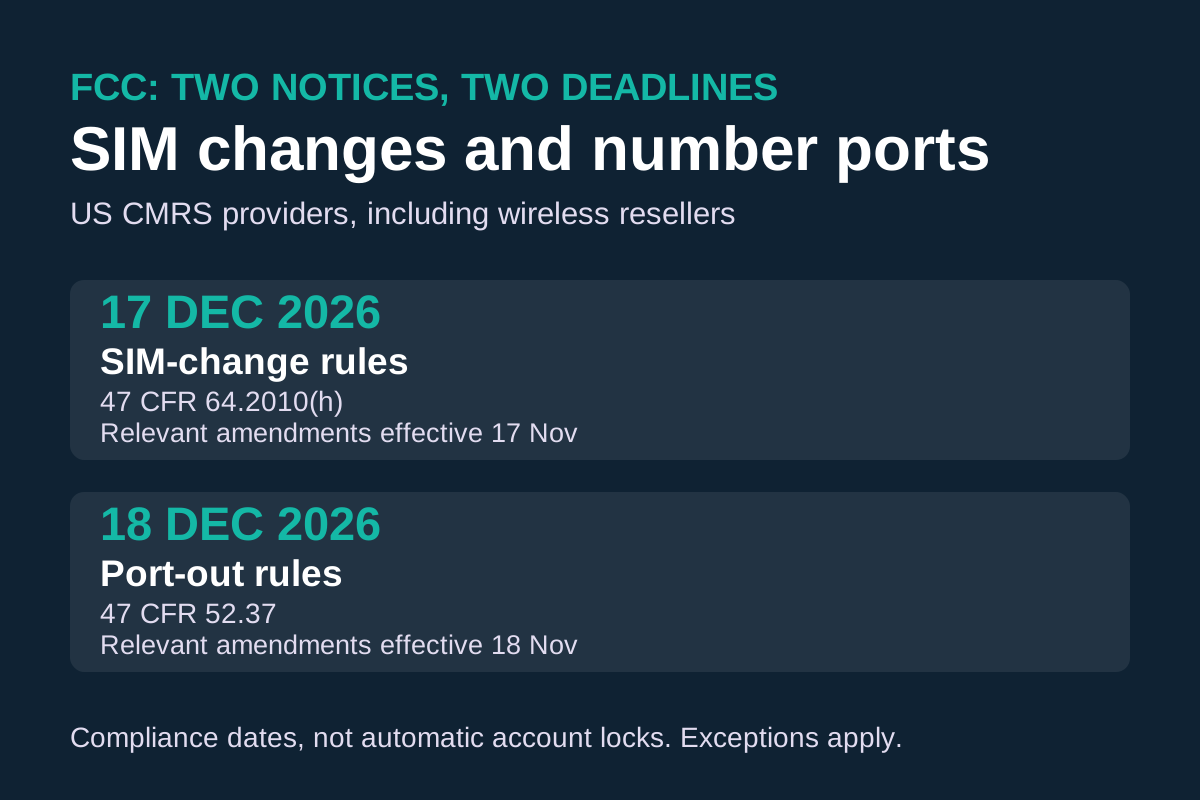
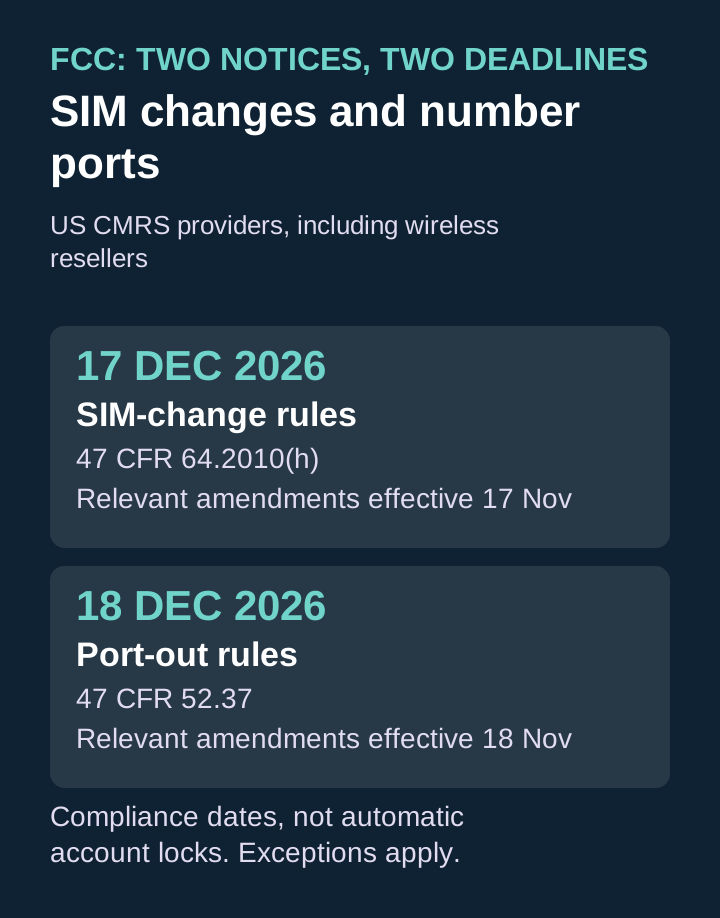
Two FCC notices published in the Federal Register set separate compliance dates for protections adopted in the 2023 SIM Swap and Port-Out Fraud Order. The 17 November 2026 notice sets 17 December 2026 for the SIM-change rules in 47 CFR 64.2010(h). The 18 November notice sets 18 December 2026 for the number-portability rules in 47 CFR 52.37. These are US provider obligations, not worldwide rules or a guarantee that fraud will stop.
Effective date is not the compliance deadline
The dates paragraphs say the relevant delayed amendments become effective on 17 November and 18 November respectively. The separate compliance paragraphs give covered providers until 17 December for SIM changes and 18 December for port-outs. Both notices follow OMB approval of information-collection requirements. Their titles refer to both types of fraud, but the sections and dates differ. The notices are not a new 2026 adoption of all the underlying protections.
Two related problems, two rule sections
A SIM change moves service to a different physical or virtual SIM. A port-out moves a number to another provider. Fraudsters can use either route to divert calls and texts. Under the 2023 rule text, section 64.2010(h) addresses SIM changes; section 52.37 addresses number ports. The rules cover commercial mobile radio service providers, including resellers, rather than every communications service.
The rule text requires secure customer authentication before the relevant change, immediate notice of a request before it is completed, and a no-cost option to lock the account against the relevant type of change. A port-out lock blocks port requests; a SIM-change lock blocks SIM changes. Do not assume a provider's single setting necessarily covers both. The order encourages providers to let customers activate both in one step, but that is not a promise of an identical interface across providers.
The rules also address notices of available protection measures and fraud-reporting processes. The 2023 text requires prompt investigation and reasonable remediation steps within the provider's control, and documentation of fraud upon the customer's request. The SIM-change rules additionally include recordkeeping of requests and authentication measures. These are selected duties, not a complete compliance checklist.
Read the underlying section, not only the synopsis
The 18 November port-out notice's summary of account locks refers to SIM-change requests. The underlying section 52.37(d) instead describes locks against porting a number. We use the section text to distinguish the two protections rather than turning that synopsis wording into a combined deadline or lock type. The eCFR page returned during our check still showed reserved paragraphs and the older pending-compliance wording, so this article relies on the published Federal Register notices and the original 2023 rule text for this distinction.
Exceptions and practical limits
The texts contain exceptions for legitimate line-separation requests under the Safe Connections Act and its implementing rules, including protections relevant to survivors. The rules also allow flexibility in how providers authenticate customers. This short summary does not replace the complete rule, provider-specific advice or legal advice. We have not tested any carrier's settings or established its compliance status.
Customers can check which SIM-change and number-port protections their own provider offers, how to activate and remove each lock, and where to report an unauthorized request. The deadlines do not mean a lock will be automatically enabled on every account. Prepared with AI assistance and reviewed on 19 November 2026.
- Federal Register, SIM-change effective and compliance dates, 17 November 2026
- Federal Register, port-out effective and compliance dates, 18 November 2026
- Federal Register, original 2023 rule
- GPO, original 2023 rule edition
- eCFR section 52.37, returned older wording at review