Explainers
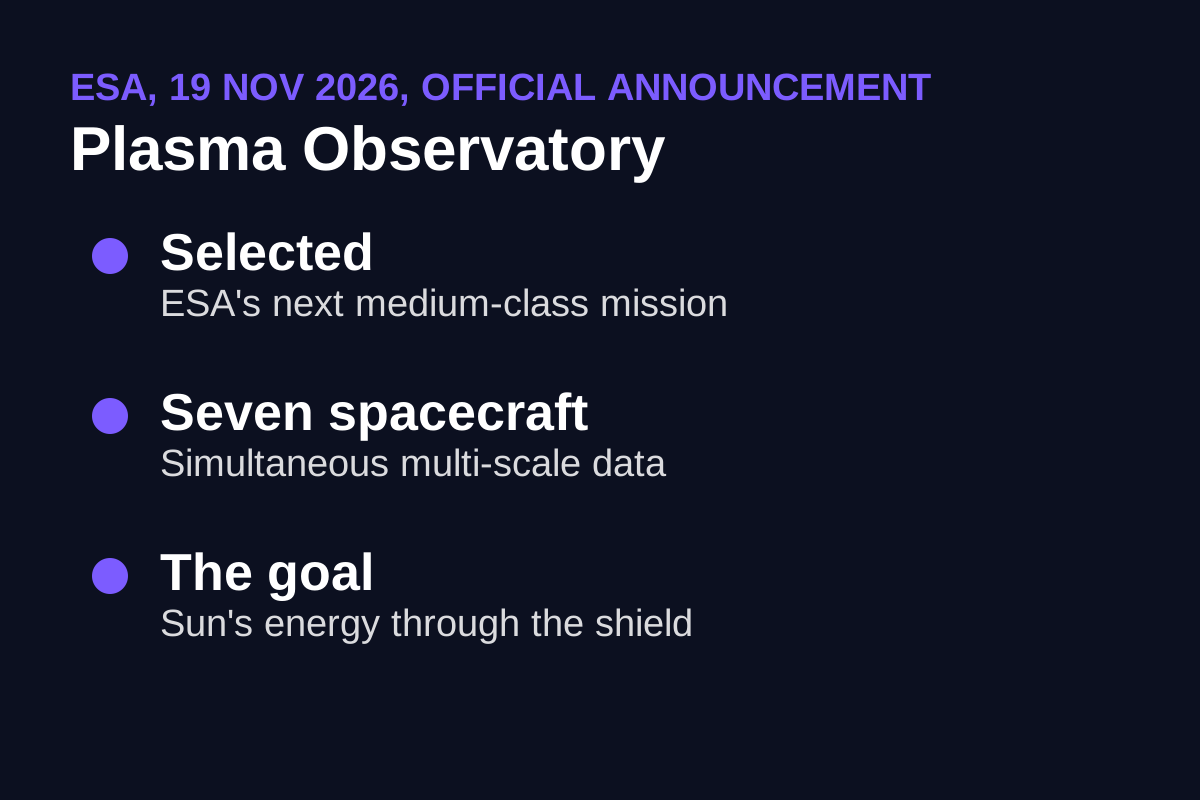
ESA member states select Plasma Observatory: seven spacecraft to track the Sun's energy through Earth's magnetic shield
Official ESA announcement: selection decision (not a launch), seven-spacecraft multi-scale magnetosphere measurements, Cluster heritage, 2027/2030 next-selection dates flagged as schedule.
20 November 2026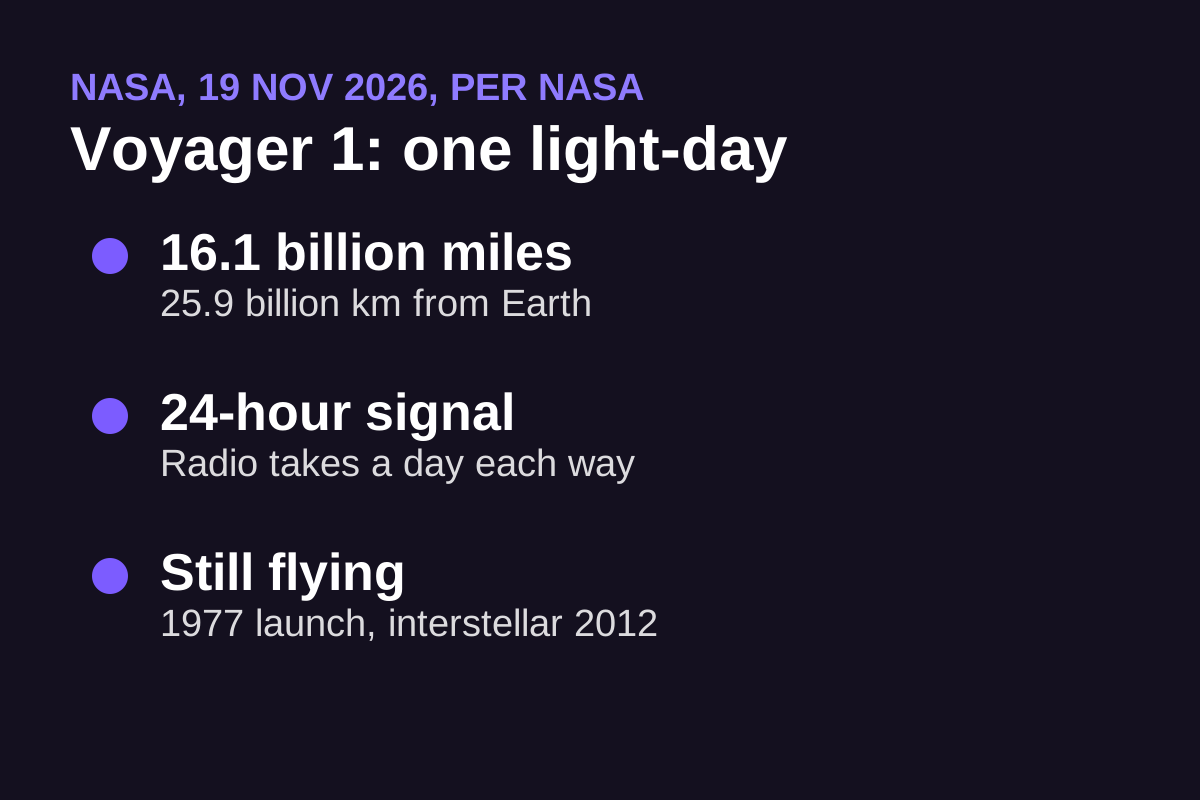
NASA says Voyager 1 reached one light-day from Earth on Nov. 18, after 49 years of travel
About 16.1 billion miles out, radio now takes 24 hours each way. Confirmed via carrier signal while a data issue is analyzed. Per NASA's release.
20 November 2026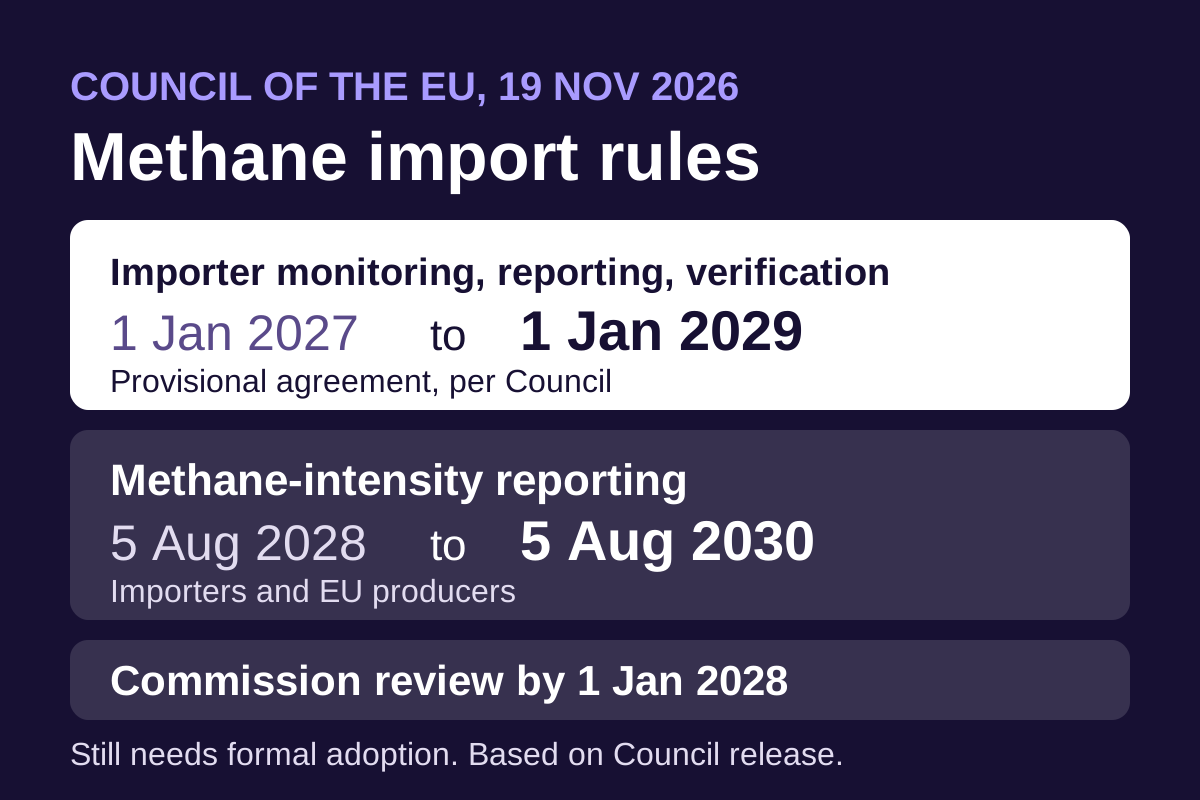
EU negotiators agree to push back methane rules on fossil fuel imports by two years
The Council says a provisional deal moves importer reporting to 1 January 2029. It still needs formal adoption by Council and Parliament. Based on the Council press release, not the legal text.
19 November 2026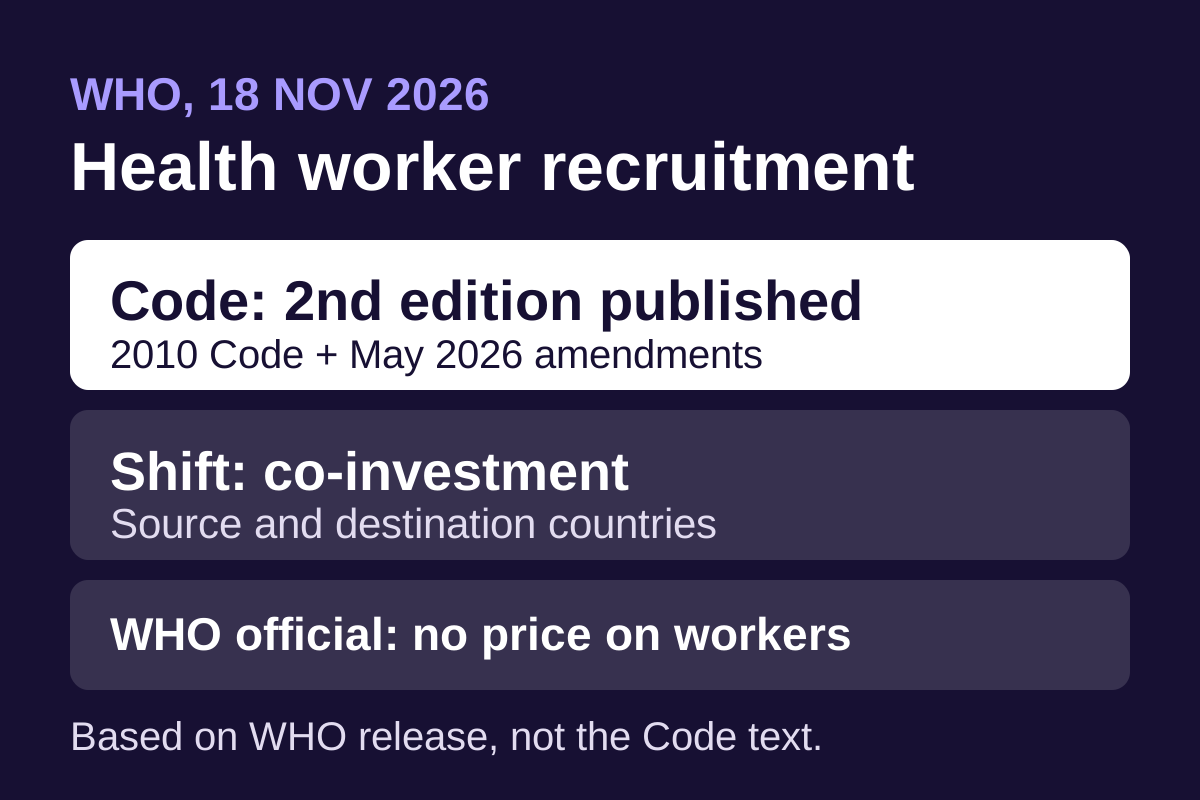
WHO publishes second edition of its Code on international recruitment of health workers, with a stronger focus on co-investment
WHO says the update merges the 2010 Code with the amendments adopted in May 2026. Based on WHO's news release, not the Code text.
19 November 2026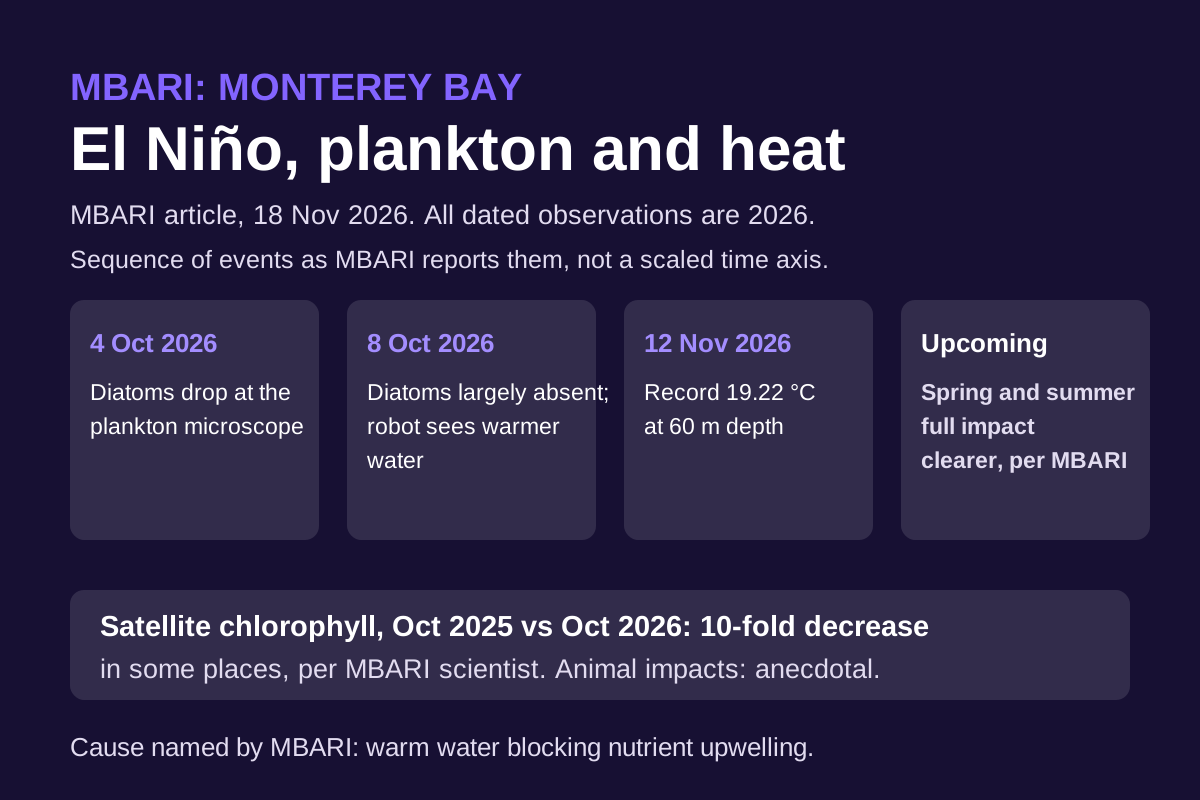
MBARI says El Niño warm water has caused a sharp plankton decline in Monterey Bay
The institute's instruments logged a drop in phytoplankton from early October and record deep-water warmth on 12 November 2026. Effects on larger animals are anecdotal so far, and MBARI says the full impact won't be clear until spring and summer.
19 November 2026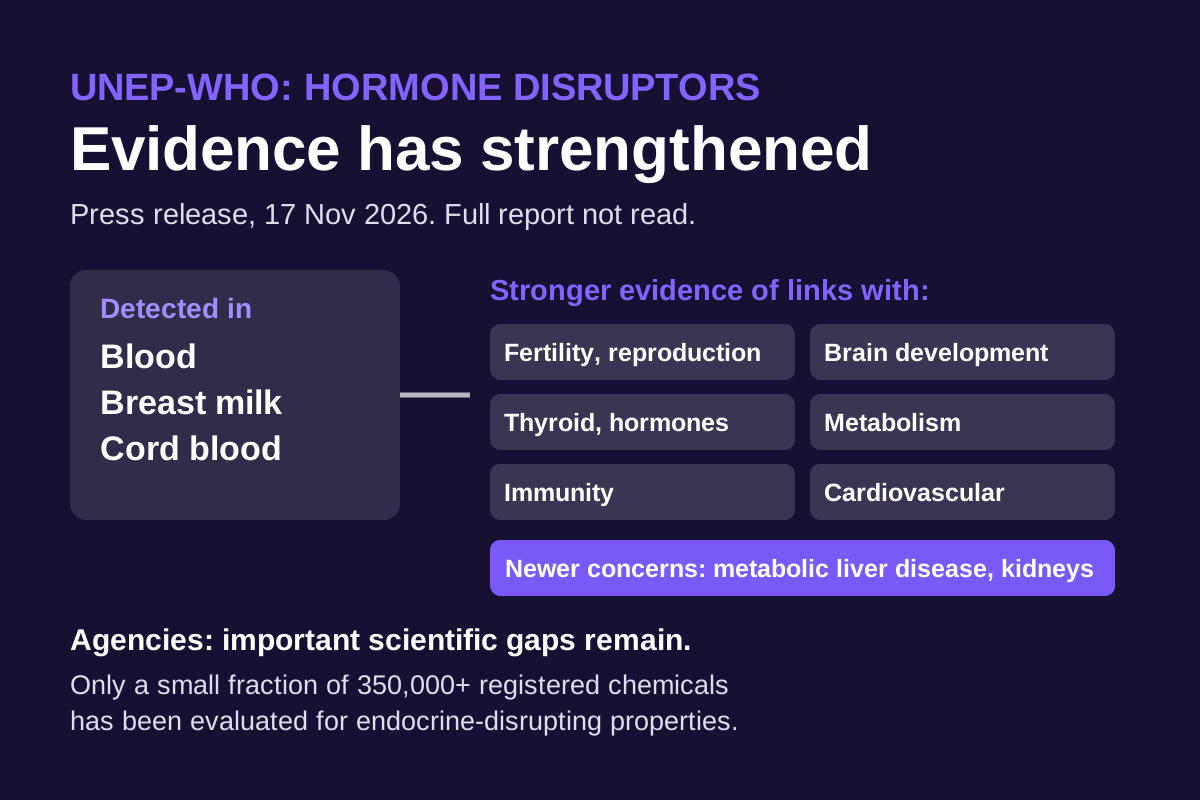
UNEP and WHO say evidence linking hormone-disrupting chemicals to harm has strengthened, with exposure starting before birth
The first major global update since 2012 finds stronger links to fertility, brain development and metabolism. The agencies also say important scientific gaps remain. Based on the UNEP-WHO press release, not the full report.
19 November 2026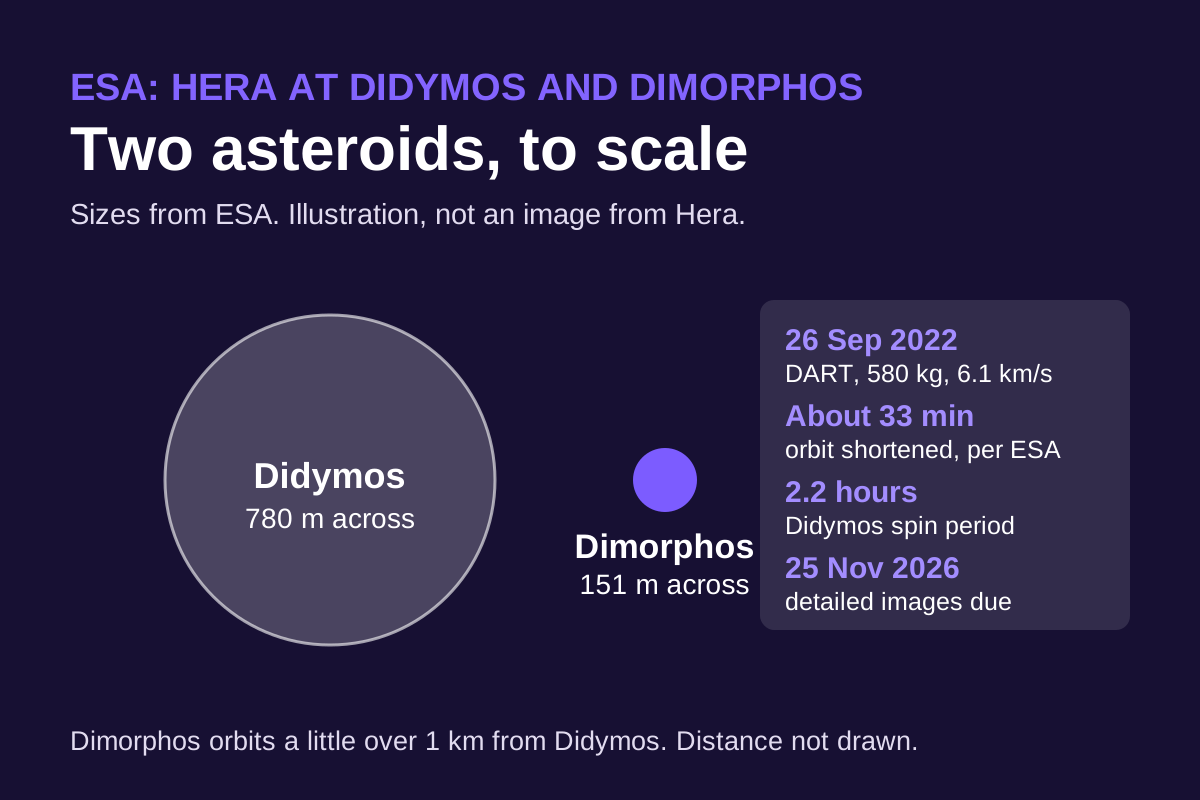
ESA's Hera has reached the asteroid NASA's DART hit, and says the first detailed images will be shown on 25 November
Hera arrived at the Didymos and Dimorphos pair. ESA has released early previews and says detailed images come on 25 November 2026. What the previews show, and what scientists still want to learn.
19 November 2026
EU Council and Parliament reach a provisional deal to speed up permits for renewables and power grids, with a final vote still to come
The 18 November 2026 agreement covers renewables, grids and storage. It is provisional: both institutions must still endorse and formally adopt it, and member states would then have 1.5 years to apply it.
19 November 2026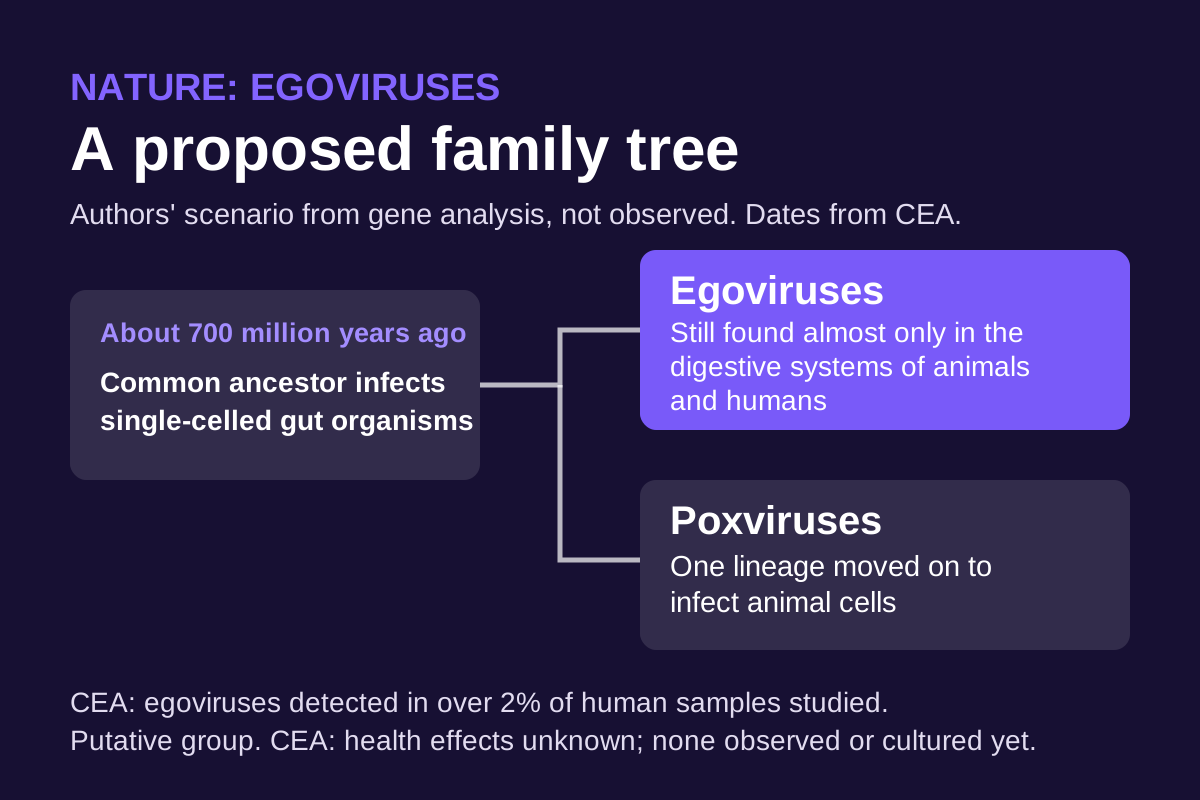
Researchers report a new group of giant gut viruses, egoviruses, and call them the closest known relatives of poxviruses
A Nature paper from 18 November 2026 describes viruses found almost only in the digestive systems of humans and animals. The authors say the group is putative and the poxvirus origin story is a scenario, not a settled fact.
19 November 2026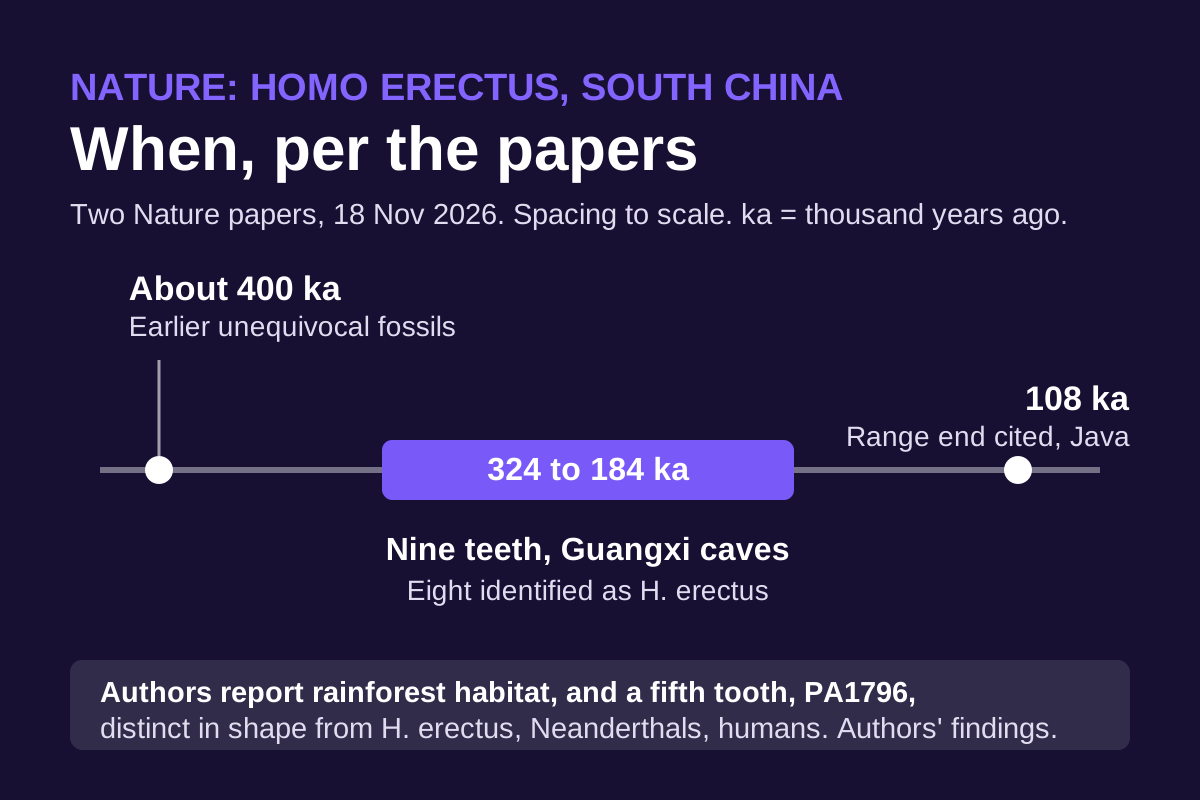
Nine teeth from two Chinese caves suggest Homo erectus lived in southern China as recently as 184,000 years ago, two Nature papers report
Two open-access Nature papers published 18 November 2026 describe the same teeth. They report dating of 324 to 184 thousand years ago, plus protein and tooth-shape evidence. Findings are the authors' own and rest on nine teeth.
19 November 2026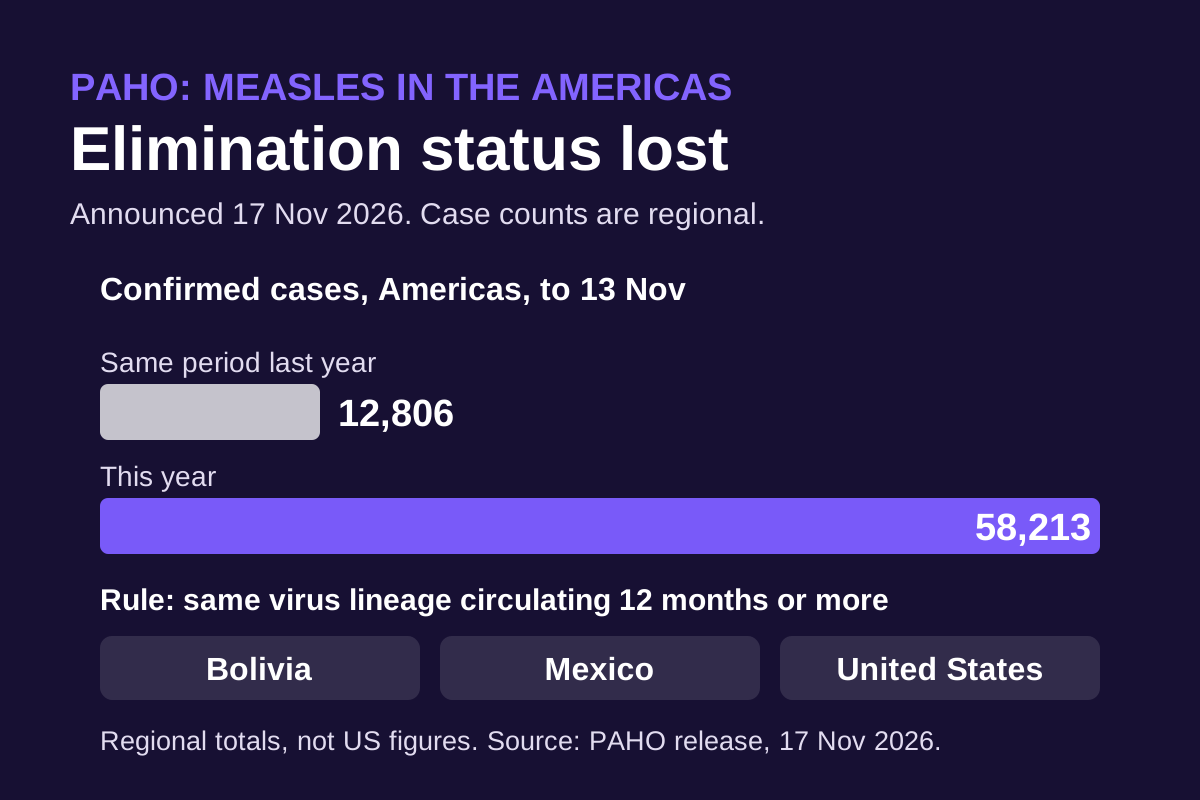
PAHO says the US, Mexico and Bolivia have lost measles elimination status, with 58,213 cases reported in the Americas this year
What PAHO's 17 November announcement says, what the 12-month rule means, what the US CDC said in reply, and what UNICEF and press reports add. Regional case counts are not US figures.
19 November 2026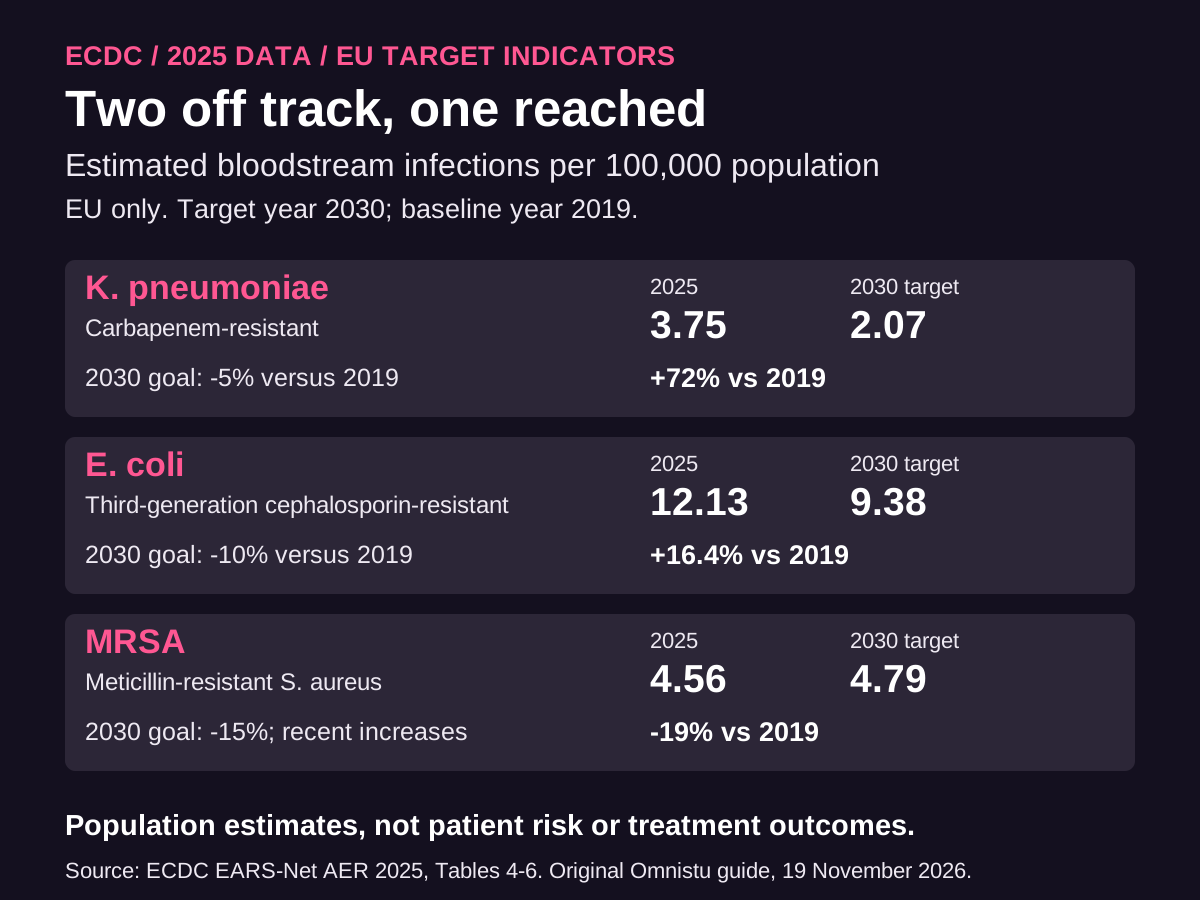
Two EU antibiotic-resistance targets are off track in ECDC's 2025 data; MRSA meets its target
Estimated EU bloodstream infection incidence rose 72% for carbapenem-resistant Klebsiella and 16.4% for a resistant E. coli group since 2019. These are population rates, not a patient's chance of infection.
19 November 2026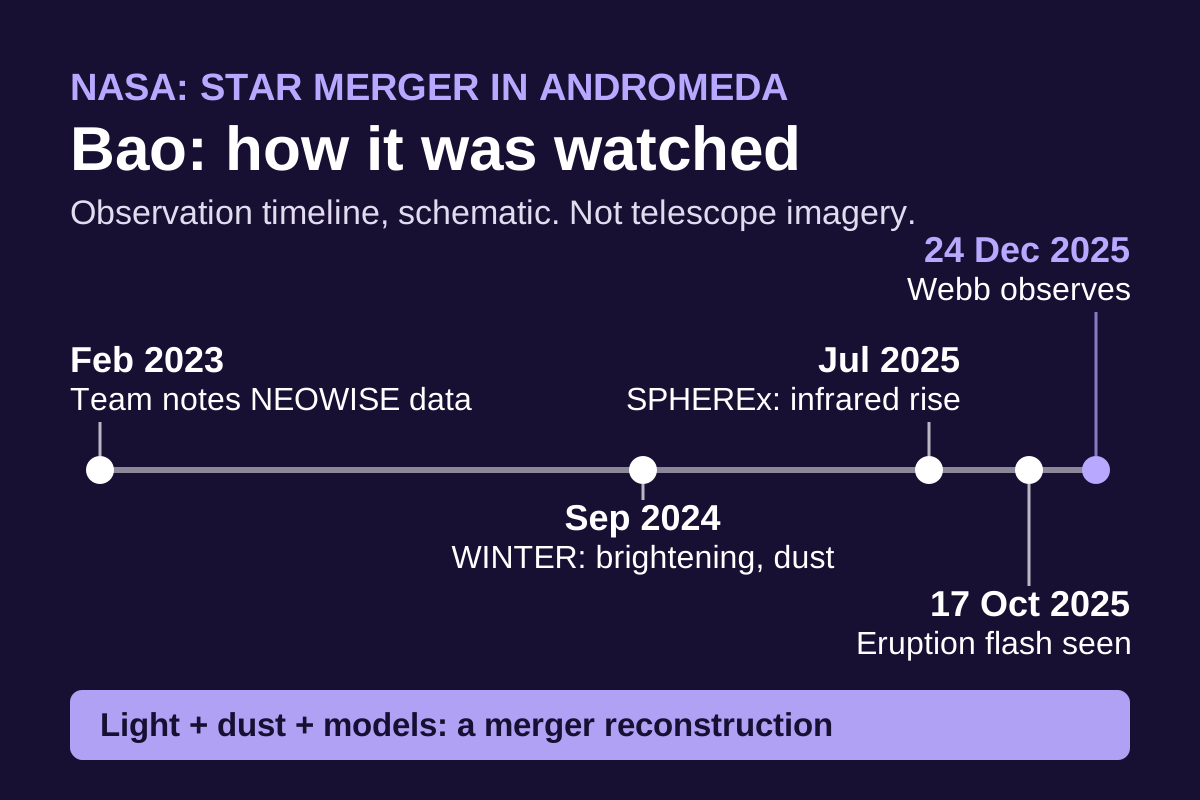
Webb data helps reconstruct the Bao star merger in Andromeda
A Nature paper links years of brightening and a 2025 eruption to a smaller star spiraling inside a giant. The result combines telescope data with models, not a resolved picture of the collision.
19 November 2026
What Google asks of news sites that want ads and Google News
AdSense asks for unique content and a good reader experience. Google News asks for dates, bylines and publisher details.
19 November 2026