Google Labs puts Stitch Loop on a waitlist, with proposed code changes reviewed through GitHub
Stitch Loop is described by Google as an experiment. Nothing merges until you review the pull request. Access is by waitlist.
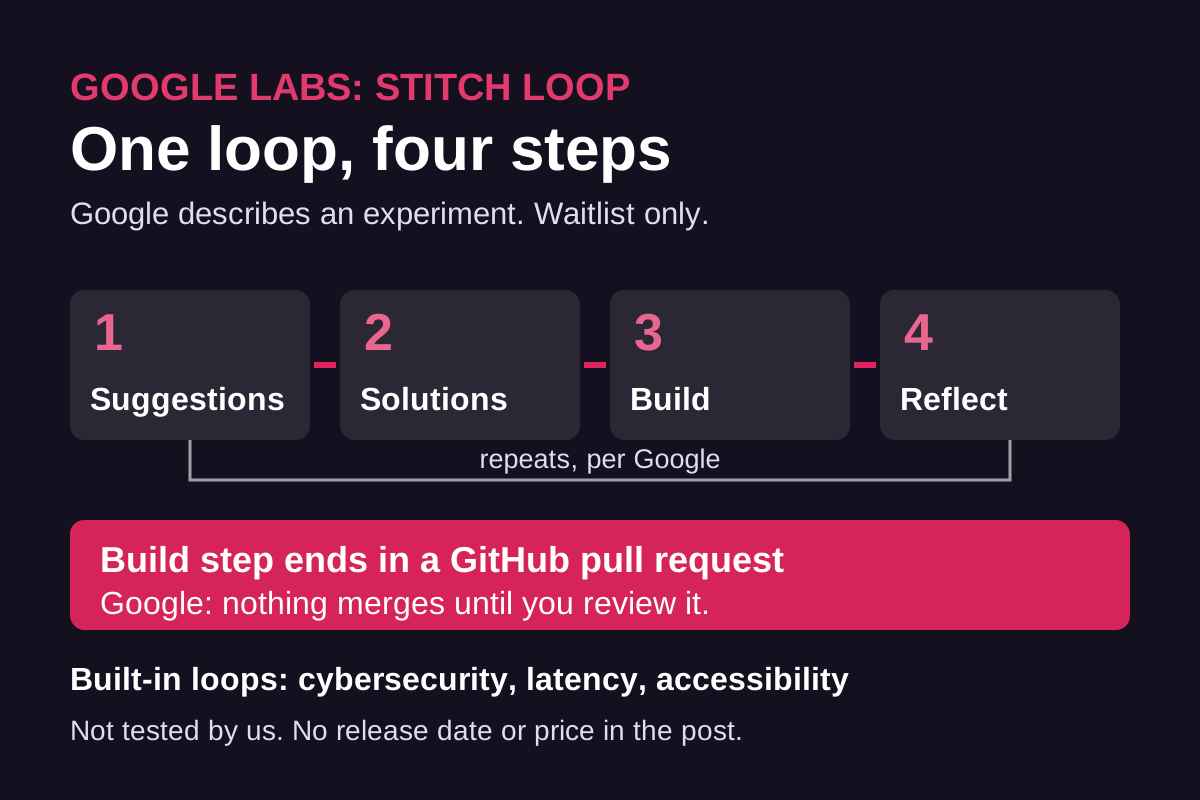
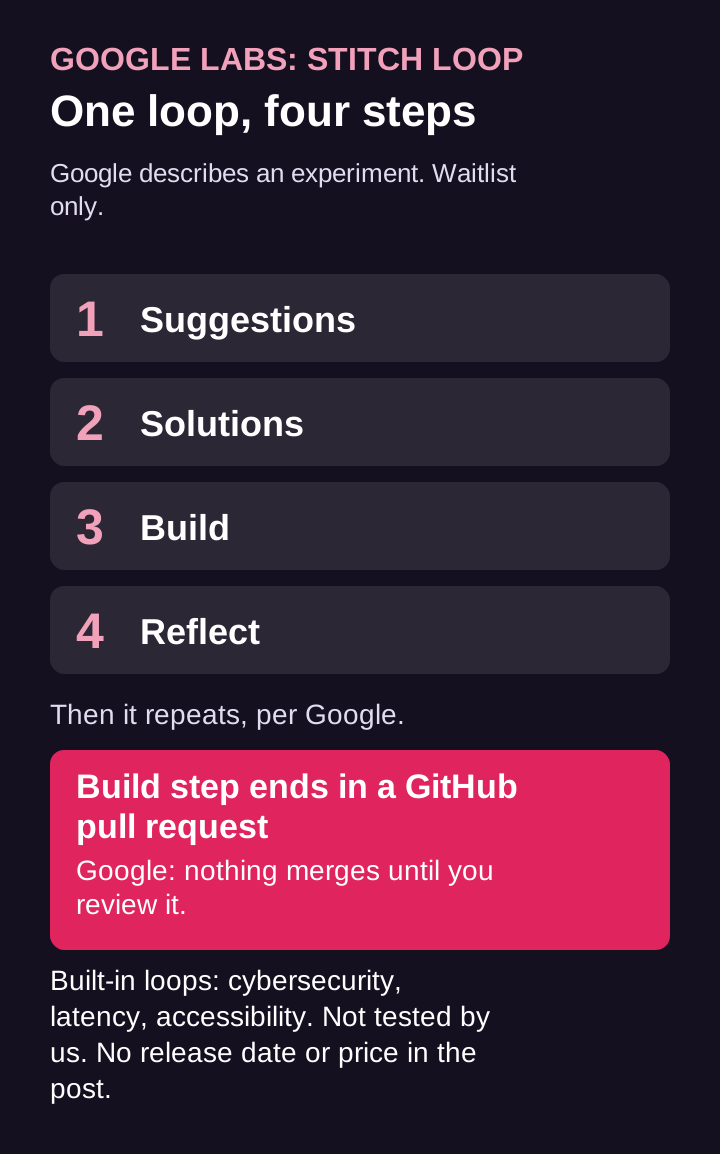
Original Omnistu diagram of the company announcement. Not a product test or an independent inventory check.
On 18 November 2026 Google Labs introduced Stitch Loop, which it calls a new experiment: a long-running product agent that connects to your codebase and live metrics to keep improving what you have already shipped. Google positions it as a tool for post-launch work, such as investigating vulnerabilities, checkout speed and signup drop-offs. Those are intended uses, not outcomes tested by Omnistu.
How the loop works, per Google
You connect GitHub and product context such as logs, user behavior and feedback. Google lists over 180 integrations, custom MCP servers and local CLI uploads. Each loop then runs four steps: suggestions, solutions with tradeoffs, a build step where code is written in an isolated cloud sandbox and a GitHub pull request is opened, and a reflect step that keeps watching live data. Google says you always have the final call and nothing merges until you review the pull request.
Built-in loops and a security claim
Google says Stitch Loop includes built-in loops for cybersecurity, latency and accessibility, plus custom loops such as improving checkout conversion. For security, Google says the loop pairs the cyber security capabilities of Gemini 4 Carbon with CodeMender, a DeepMind agent, to scan a codebase and open pull requests with proposed fixes. These are Google's descriptions; we have not tested Stitch Loop or its security results.
Access
Google says the waitlist opened on 18 November for all users globally, with eligible Google AI Ultra users getting priority access. The post does not give a general release date or pricing, and this article does not assume that joining guarantees access. This is an AI-assisted summary of Google's announcement, reviewed on 19 November 2026, not a product or security test.