Proton releases Lumo Desktop, an AI assistant that can work with your files and apps
Proton says its source code is public and that you choose which actions the assistant may take on its own. The privacy claims are Proton's.
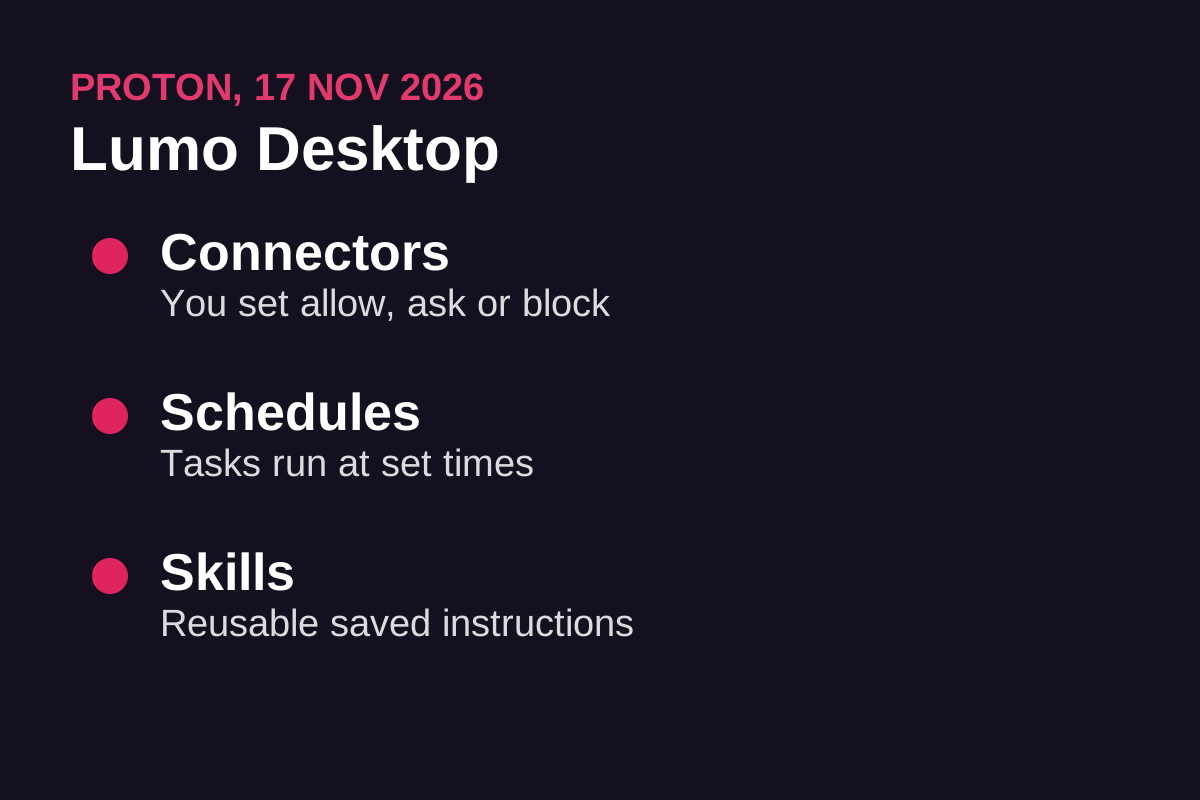
On 17 November 2026 Proton released Lumo Desktop for Windows, macOS and Linux. Lumo is Proton's privacy-focused AI assistant. The desktop app adds three features: Connectors, Schedules and Skills.
What the new features do, per Proton
Connectors let Lumo find information and act in apps you connect: local tools such as the filesystem and shell, Proton Mail through Proton Mail Bridge, services such as Google Drive, Jira and Confluence, and your own Model Context Protocol (MCP) servers. For each Connector you choose which actions run automatically, which need your approval and which are blocked. Schedules run a task at a set time or repeatedly, for example a weekly inbox summary. Skills save reusable instructions, so you do not repeat them in every chat.
Privacy claims
Proton states that Lumo never uses your conversations or connected-app data to train models or serve personalized ads, that zero-access encryption means no one but you can read your chat history, and that it is hosted on European infrastructure under Swiss privacy law. Proton also says it is publishing the source code so the community can inspect it, and that a first NVIDIA B300 cluster is going live in Switzerland. These are Proton's statements. We have not audited the code or the encryption.
Why it matters
Assistants that can read files and send email need access to sensitive data, so the permission model is the main thing to look at. Proton describes an allow, ask or block choice per action. If you try it, start with read-only actions and require approval for anything that sends or deletes.