YouTube folds estimated TV co-viewers into public view counts, leaving creator pay on the old metric
Since 16 November, one living-room playback can register as several public views across long-form, Shorts and live, estimated by a statistical model rather than measured. YouTube says Partner Program earnings and eligibility are untouched; the gap lands in the numbers brands see.
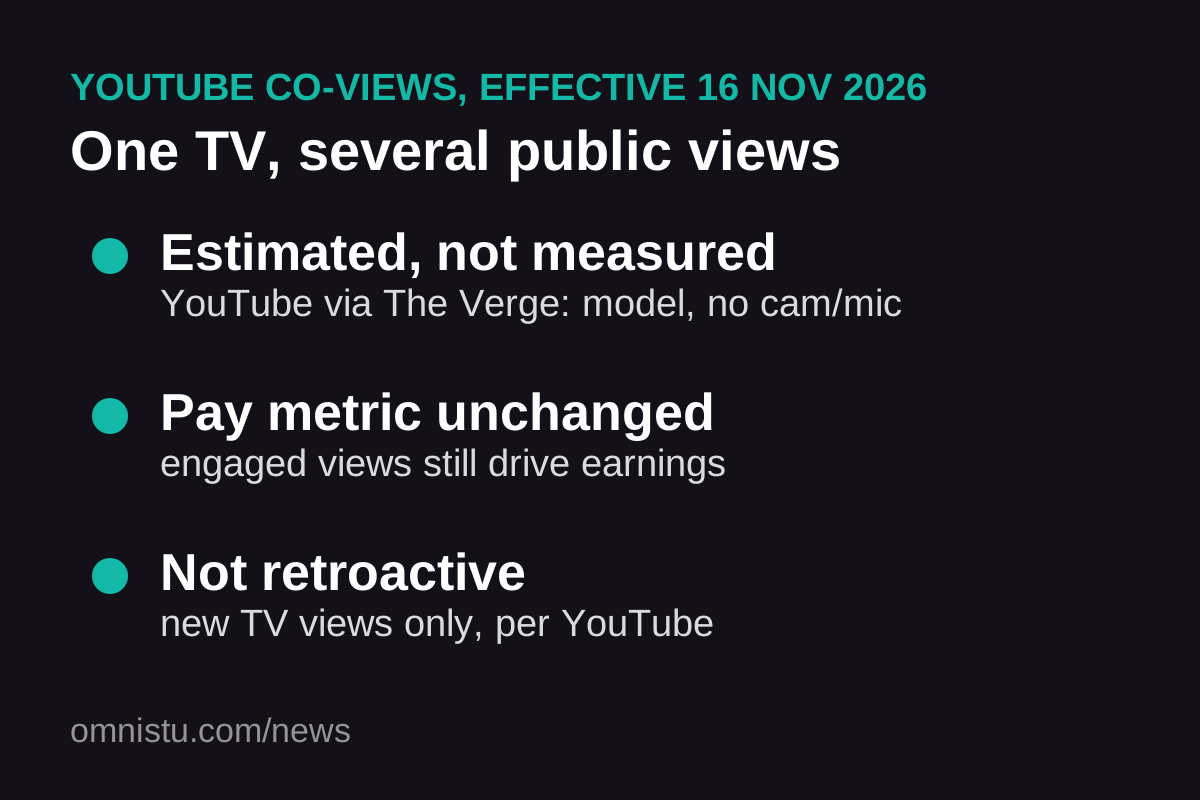
YouTube has started folding "co-views" - its estimate of how many people watch a video together on a TV - into public view counts across long-form videos, Shorts and live content, effective 16 November, as reported by The Verge and Engadget from the platform's official TeamYouTube community post and Help Center. A single living-room playback can now register as several public views.
What YouTube says it is doing
YouTube says the change gives a more "complete picture" of how people use the platform and aligns its counting with TV industry standards, which similarly estimate audience size per screen. In its announcement, as reported by The Verge, the company says it does not use cameras or microphones; co-views come from what it calls a "privacy safe statistical model" that takes into account demographic patterns and viewing times (that wording is not on the Help Center page). The estimate applies only to new TV views going forward and will not be added retroactively. YouTube is explicit on money: the update "won't impact your YouTube Partner Program (YPP) earnings or eligibility," because pay still runs on engaged views and engaged watch hours, which exclude co-views.
Why creators are paying attention
The split creates two numbers where there used to be one. The public counter under a video - the number brands see when pricing sponsorships - now includes estimated co-viewers, while the revenue counter does not. Parasocial Magazine, a creator-economy outlet, frames the consequence for rate cards: public-view-based pricing "just lost a layer of precision," landing in the middle of rate-card season. That is the outlet's analysis, not a YouTube statement. The change also follows an August update in which YouTube began counting a view as soon as a video starts playing, a shift it said would make counts rise faster.
Why it matters
YouTube is now watched more on TVs than on phones, and measurement is how that dominance converts to ad and sponsorship money. Counting people-per-screen brings YouTube's public numbers closer to broadcast measurement, which advertisers already buy against - but it also widens the gap between the audience a video appears to have and the views a creator is paid on, a gap brands and creators will have to negotiate around until one metric wins.
What to keep in mind
The co-view figure is an estimate from a model YouTube has not published, so neither creators nor advertisers can audit how many physical viewers sit behind a public view. YouTube's assurance that earnings are untouched comes from its own Help Center. The rate-card impact is creator-press analysis, not measured data, and YouTube has not said whether co-views will ever factor into monetization.
- YouTube Help Center: How engagement metrics are counted (checked 20 November 2026)
- The Verge (17 November 2026): YouTube found a new way to inflate view counts
- Engadget (18 November 2026): YouTube Will Start Boosting Public View Counts When You Watch On A TV
- Parasocial Magazine (19 November 2026): YouTube Co-Views Inflate View Counts, Not Creator Pay