YouTube's monetization policy: what counts as "inauthentic" content
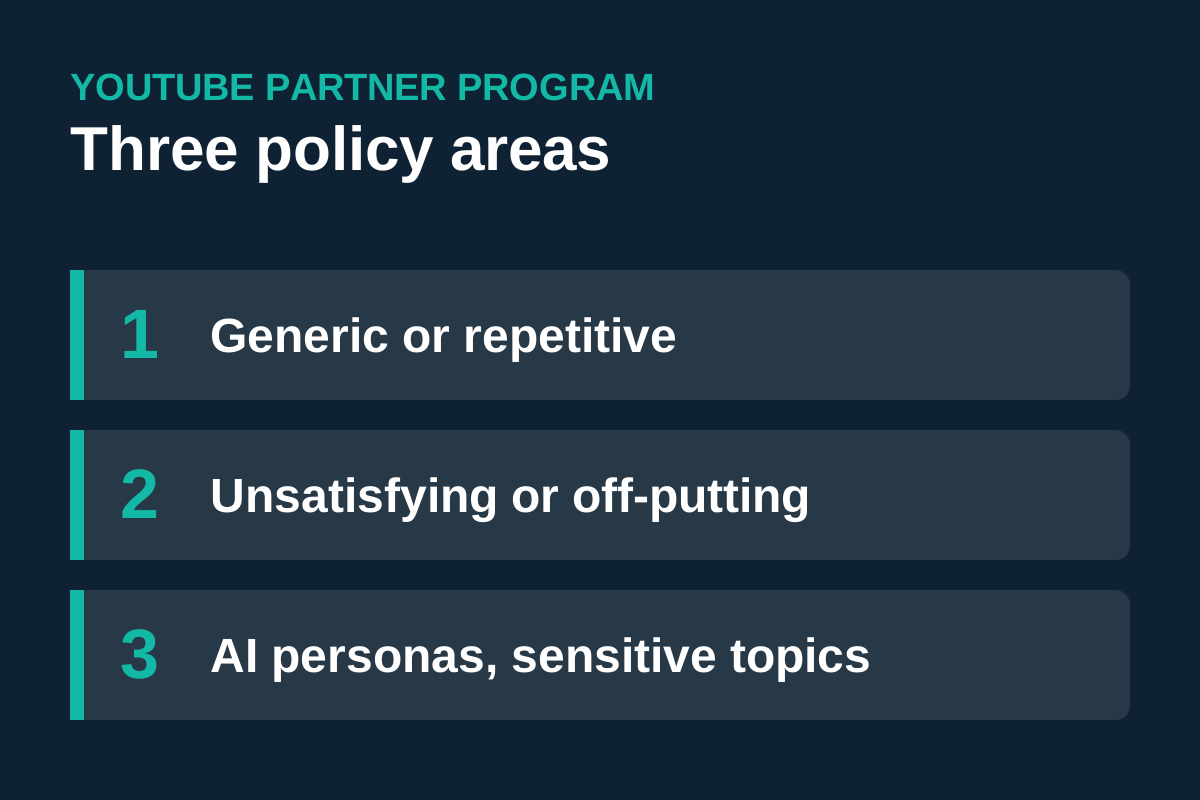
YouTube names three categories that can lose Partner Program monetization. Templates and AI tools are allowed if the result is original and adds value.
YouTube's channel monetization policies say content must be the creator's original work and "not be mass-produced, generic, repetitive, or manipulative."
Generic or repetitive content
YouTube says the substance of each video should be materially varied and deliver creative, educational or other value. A shared intro and outro is allowed. Its list of violations includes AI-generated content made from generic or unoriginal templates that gives the impression of mass production without the creator's original insight.
Unsatisfying or off-putting content
This covers content that relies on emotionally manipulative formulas, copies existing formats until videos feel interchangeable, or is designed to shock only for views. YouTube says that if you use automated tools or templates, the final product must still show your creative vision and give viewers educational or entertainment value.
AI personas on sensitive topics
Channels that use AI-generated personas presented as human experts giving advice on health, legal issues, finances or politics will not be allowed to monetize. YouTube's examples include an AI "doctor" giving medical advice and AI-generated podcast hosts giving investment tips.
Context
YouTube renamed its "repetitious content" policy to "inauthentic content" in July 2025 and said that content was already ineligible. TechCrunch reported on 20 July 2026 that YouTube had clarified these policies.
- YouTube Help: YouTube channel monetization policies
- TechCrunch: YouTube clarifies policies around AI slop and upsetting videos (20 July 2026)